
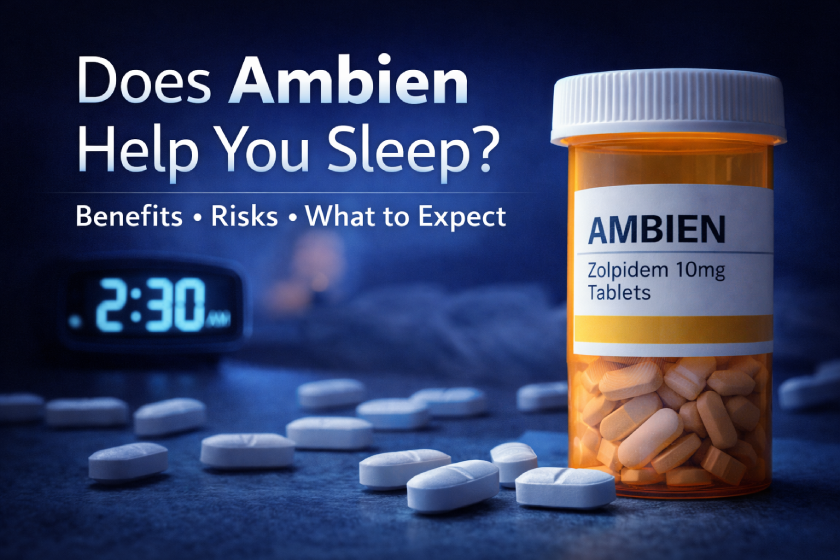
Medically reviewed information about Ambien (zolpidem) for insomnia — for informational purposes only.
What Is Ambien (Zolpidem)?
Ambien is the brand name for the prescription medication zolpidem, a sedative-hypnotic used to treat insomnia. It works by enhancing the effects of the neurotransmitter GABA in the brain, promoting relaxation and helping people fall asleep faster.
How Ambien Helps With Sleep
- Helps you fall asleep faster.
- Extended-release versions (Ambien CR) may help you stay asleep longer.
- Typically used for short-term insomnia (usually 7–10 days).
While Ambien can be effective for short-term sleep problems, it should not be viewed as a long-term solution for chronic insomnia without medical supervision.
Who Should Be Cautious With Ambien
Ambien isn’t right for everyone. People with certain conditions — such as breathing problems, liver disease, depression, or a history of substance use disorder — should consult a doctor before use.
Side Effects & Risks of Ambien
Common side effects may include:
- Daytime drowsiness or fatigue.
- Dizziness or headache.
- Memory problems or unusual sleep behaviors such as sleepwalking or sleep driving.
- Rebound insomnia if stopped abruptly.
Ambien is a Schedule IV controlled substance in many countries, meaning it has potential for misuse and dependence, especially if used beyond recommended durations.
Why Ambien Might Not Work for You
Some individuals find Ambien less effective over time due to tolerance. Others may still have trouble sleeping if the underlying cause of insomnia (such as anxiety, chronic pain, or sleep apnea) remains untreated.
Tips If You’re Taking Ambien
- Take Ambien right before bedtime — don’t wait after dosing.
- Ensure you have at least 7–8 hours of sleep time before waking.
- Avoid alcohol or other sedatives with Ambien.
- Speak with your doctor if sleep doesn’t improve after 7–10 nights.
When to See a Doctor
If your insomnia persists despite Ambien or your symptoms worsen, seek medical advice. Chronic sleep problems can indicate other health issues that require comprehensive evaluation.