
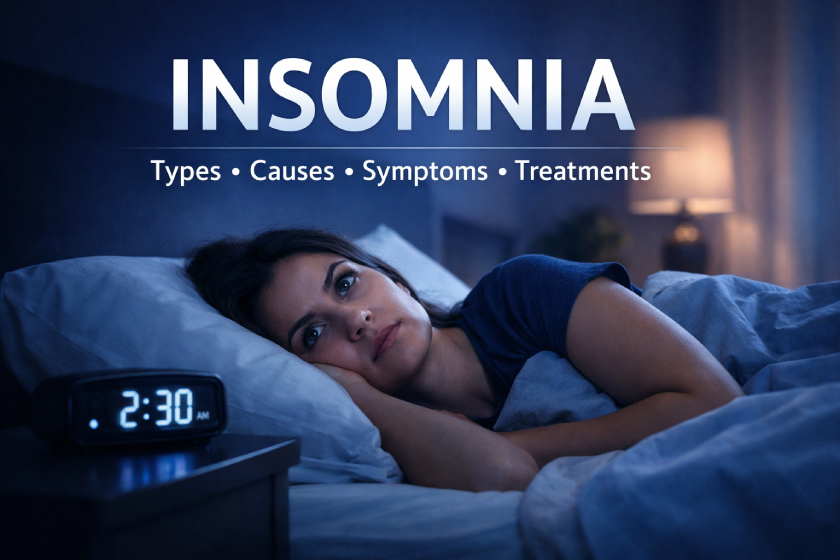
What Is Insomnia?
Insomnia is a common sleep disorder characterized by difficulty falling asleep, staying asleep, or waking up too early and not being able to return to sleep.
It can lead to daytime fatigue, poor concentration, mood disturbances, and reduced quality of life.
Types of Insomnia
1. Acute Insomnia
Acute insomnia is short-term and often caused by stress, travel, or significant life events. It typically resolves without medical treatment.
2. Chronic Insomnia
Chronic insomnia occurs at least three nights per week for three months or longer. It often requires structured treatment such as cognitive behavioral therapy.
3. Primary Insomnia
Primary insomnia is not linked to any underlying medical or psychological condition.
4. Secondary Insomnia
Secondary insomnia results from medical conditions, mental health disorders, medications, or substance use.
Common Causes of Insomnia
- Stress, anxiety, or depression
- Irregular sleep schedules or shift work
- Excessive caffeine, nicotine, or alcohol use
- Medical conditions such as chronic pain or sleep apnea
- Certain medications
Symptoms of Insomnia
- Difficulty falling asleep at night
- Frequent awakenings during sleep
- Waking up too early
- Daytime tiredness or sleepiness
- Difficulty concentrating or memory problems
- Irritability or mood changes
Diagnosis of Insomnia
Insomnia is usually diagnosed through a detailed sleep history and symptom evaluation. In some cases, sleep studies or medical tests may be recommended to rule out underlying conditions.
Effective Treatments for Insomnia
Cognitive Behavioral Therapy for Insomnia (CBT-I)
CBT-I is considered the first-line treatment for chronic insomnia. It focuses on changing sleep habits and negative thoughts related to sleep.
Lifestyle and Sleep Hygiene Changes
- Maintaining a consistent sleep schedule
- Creating a quiet, dark, and comfortable sleep environment
- Avoiding screens before bedtime
- Limiting caffeine and alcohol intake
Medications
Prescription sleep medications may be used short-term under medical supervision. Long-term use is generally not recommended without professional guidance.
When to See a Doctor
You should consult a healthcare professional if insomnia persists for several weeks, interferes with daily functioning, or is accompanied by symptoms such as severe fatigue, depression, or breathing problems during sleep.
Frequently Asked Questions (FAQs)
Can insomnia be cured naturally?
Many people experience improvement through sleep hygiene changes, stress management, and CBT-I without medication.
How long does chronic insomnia last?
Chronic insomnia lasts for three months or longer and may persist without proper treatment.
Is insomnia a serious health condition?
If left untreated, insomnia can increase the risk of mental health disorders, cardiovascular disease, and reduced immune function.
Disclaimer: This content is for informational purposes only and should not be considered medical advice. Always consult a qualified healthcare professional for diagnosis and treatment.